
Flooded Folds
Team Size: 4
Project Duration: 2 months
Software Used: Unity
Languages Used: C#
Primary Role(s): Technical Designer

Flooded Folds is a cozy 2.5D isometric puzzle game about folding paper to reach the evacuation zone during a flood. The game was created in collaboration with Kyoto University students during a study abroad. It educates the player about the hazards they should avoid during a flood disaster.
You can download it on our itch.io below!
Tech Design Contributions
Paper Folds System

Design Process:
-
One-page design created in Adobe Illustrator helped UI artists and other programmers understand the system at a glance
-
We, of course, paper-prototyped level concepts and interactions with players.
-
We decided on a max of 3 pre-set angles for each fold in world. Having pre-determined angles ensures consistency, which is crucial when puzzles have set solutions.
-
Any more than 3 angles would be diminishing returns. It gets harder for the player to understand without expanding gameplay much.
-
-
Problem: We began with a turn-system that would count moves (each tile and fold counted as a move) and cause the water to rise. This initially seemed effective to keep some focus on escaping the rising water quickly, but it made many players afraid/reluctant to experiment with folds.
-
Solution: We removed it from levels with particularly complex folds and used triggered water-level changes in some places to create similar effects without worrying the player as much.
-
-
Problem: Catapulting rocks through collision was inconsistent in playtests, especially with lower frame rates. Playtesters would fail the 1st attempt and understandably look for other solutions when the rock catapult was our intended solution.
-
Solution: I changed the rock catapult to instead spawn in a rock and add impulse force at the right moment. It still looked thrown and now behaved much more consistently.
-
-
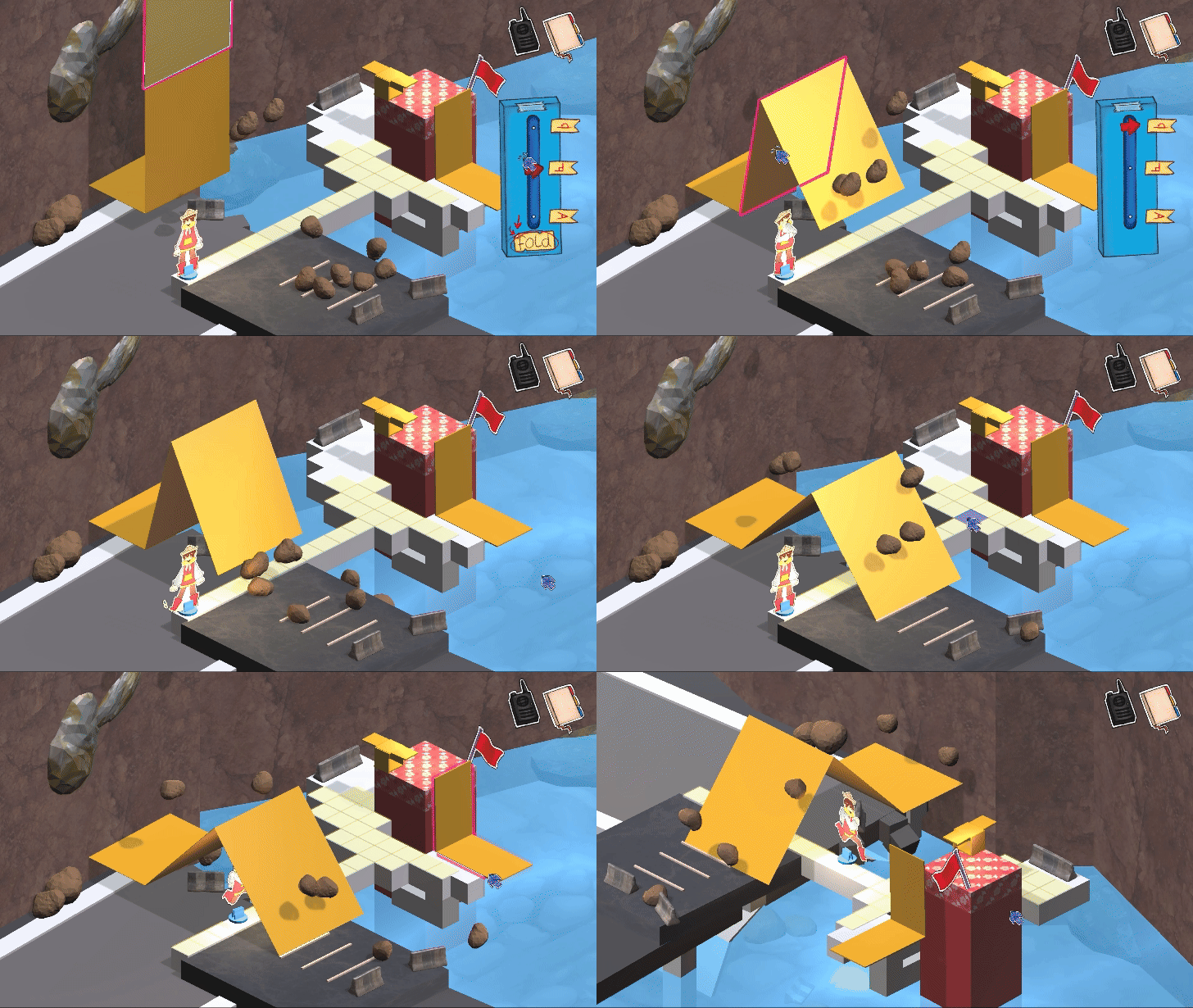
Once a fold is selected, it will bring up its associated UI which can be dragged to show real-time previews
of each angle. -
Click below to see the other ways they can interact with the player!
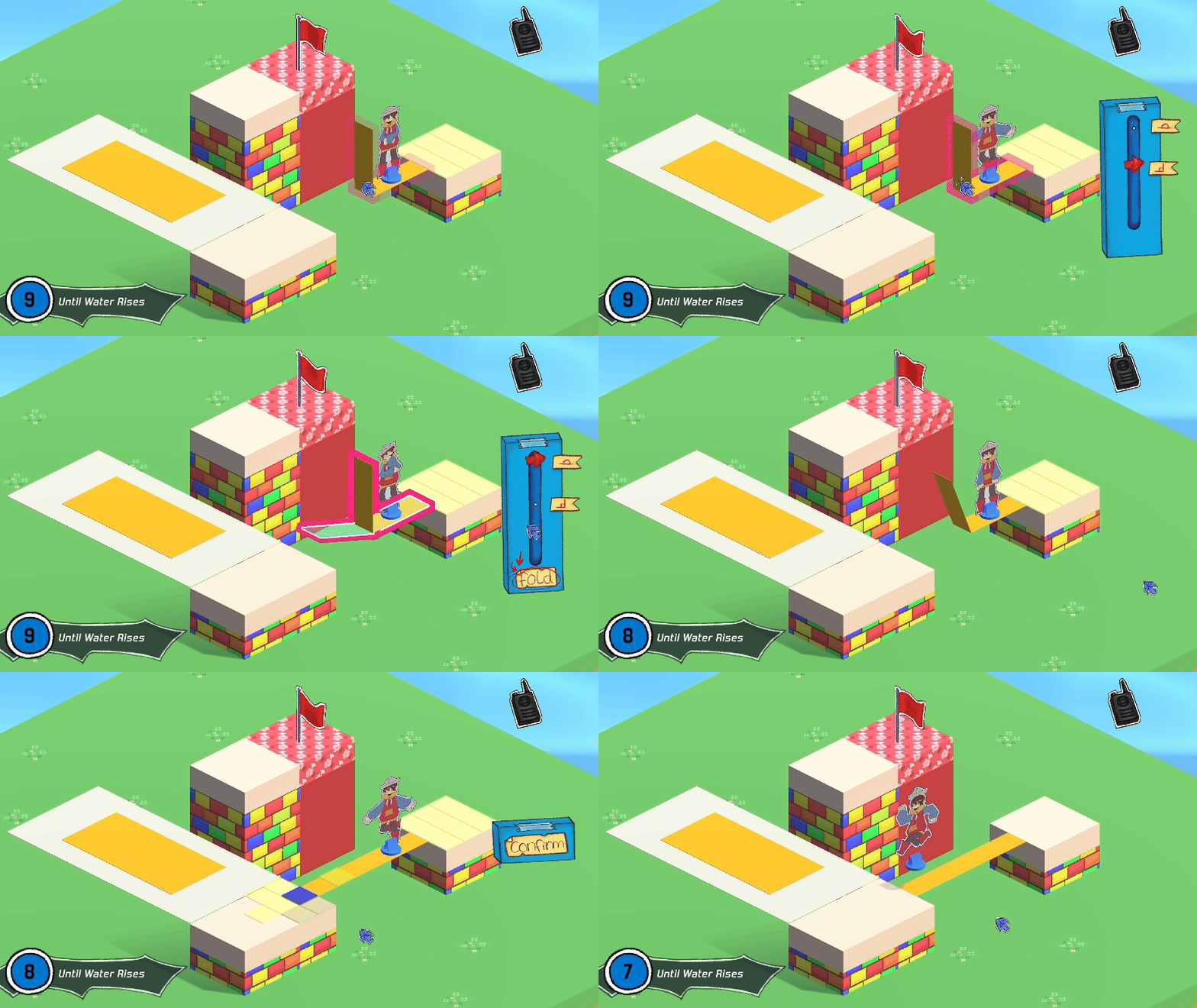 Bridge | 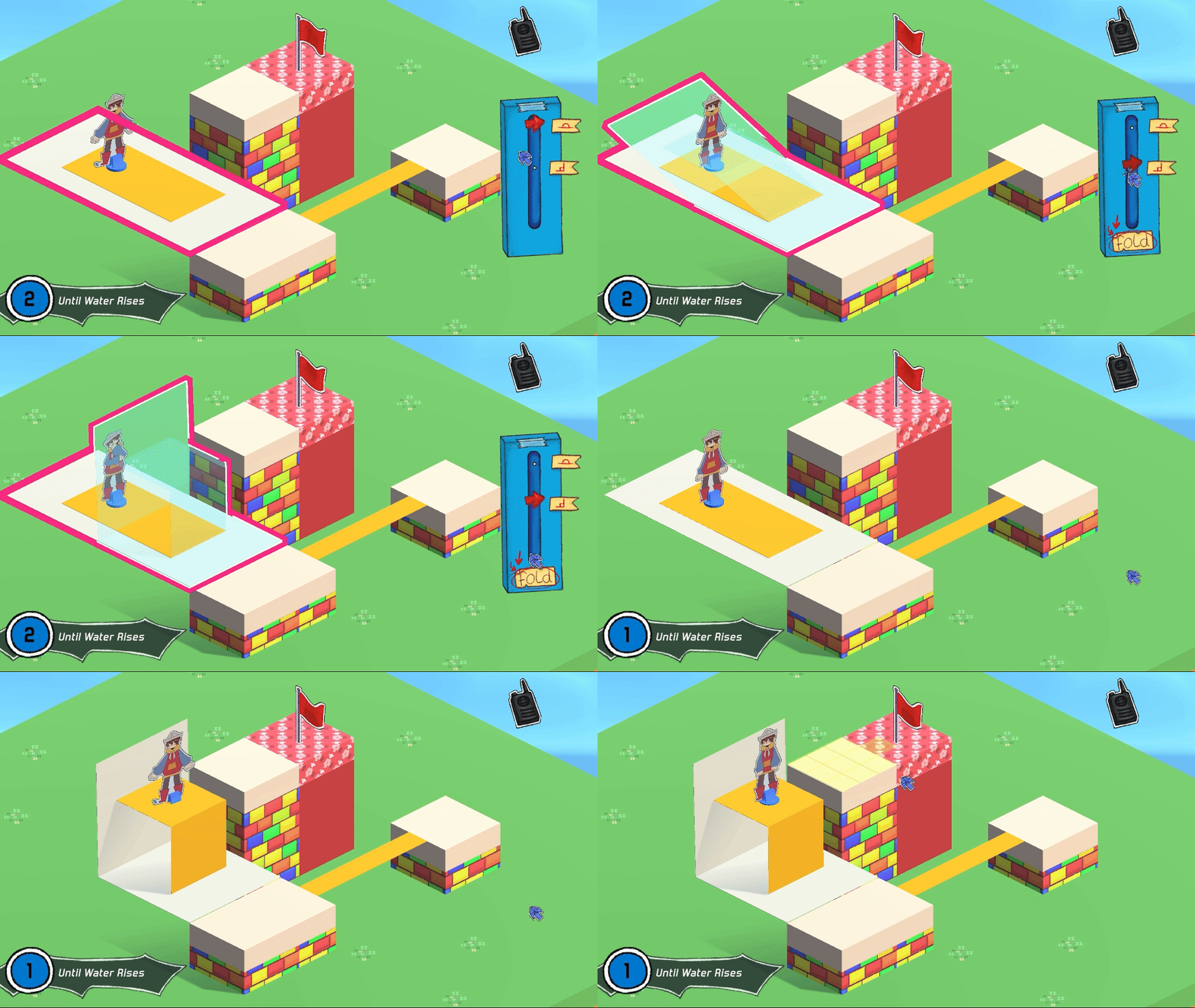 Pop-Up Platform | 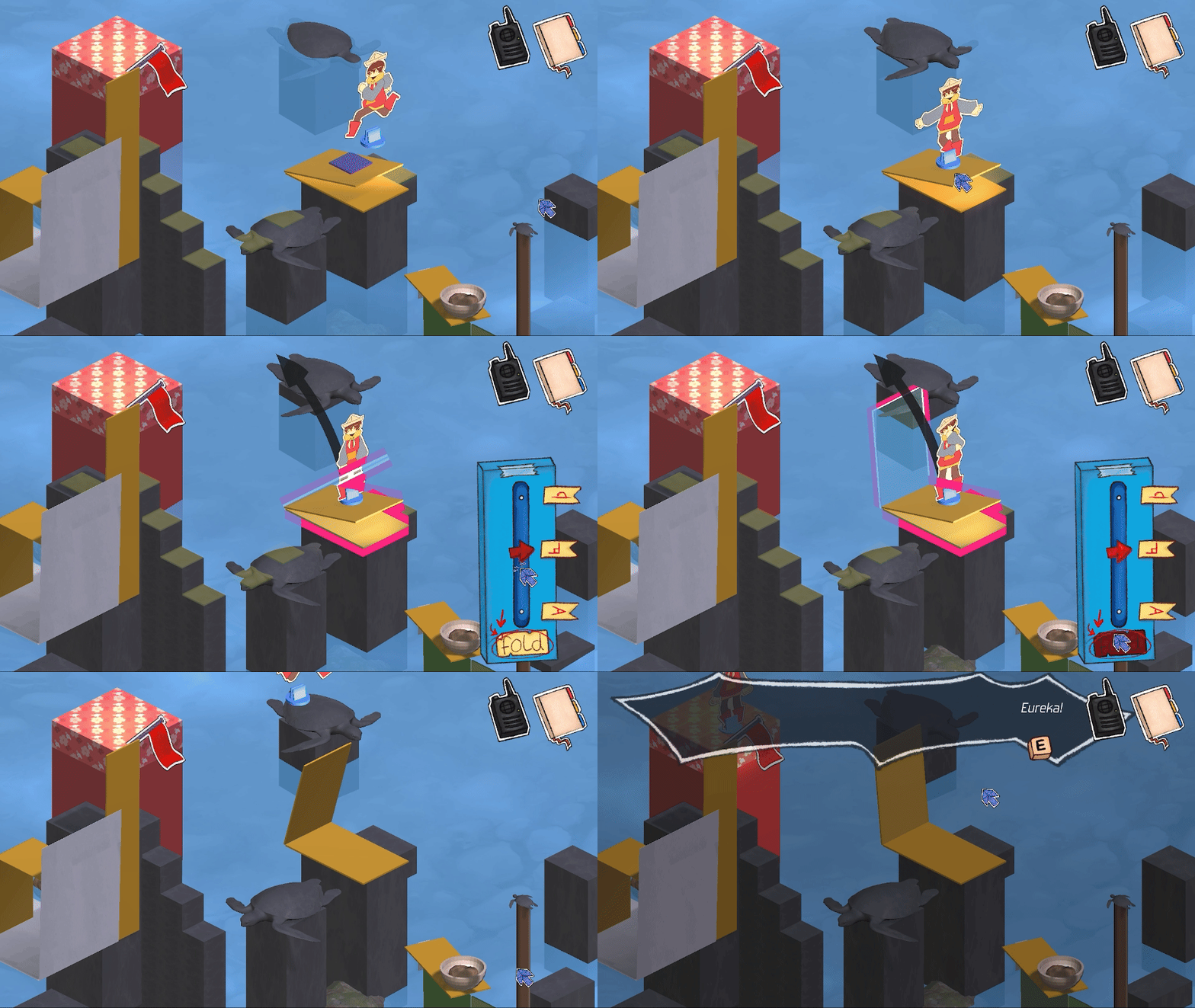 Catapult Player |
|---|
Player Movement
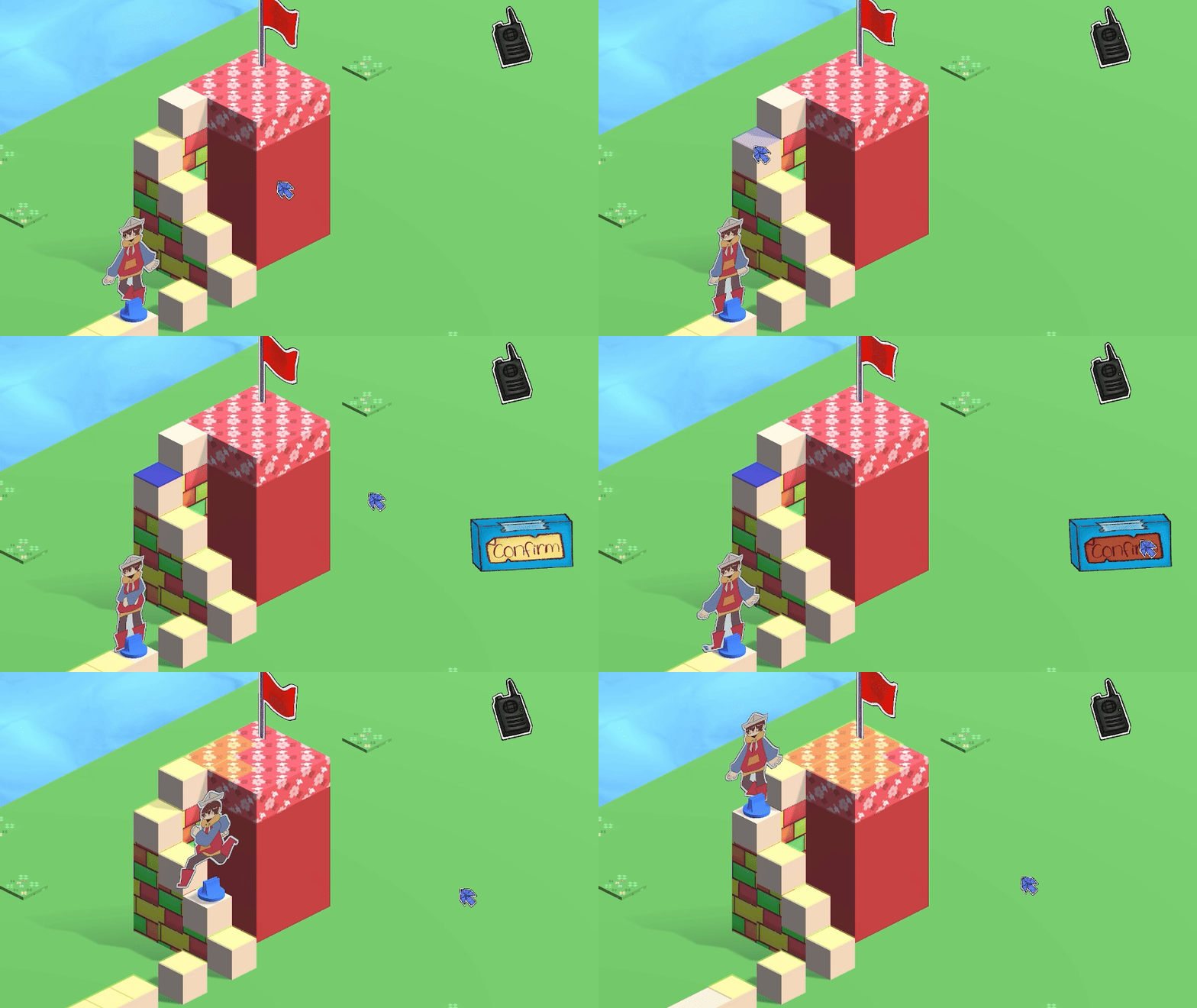
Player movement programming: I inherited this system in a buggy, broken state. It took a large refactor and a switch to spherically interpolating to get the player smoothly moving between elevations and across small gaps.
Additionally, I took on the complex challenges that came with making the movement work with changing paper folds. Which means the system adapts to dynamic bridges, clearing hazards, and folds being held in place by other folds.
Other contributions:
-
Created designer-friendly prefabs for rock/landslide hazard
-
Planned and developed tile/fold selection along with their associated UI elements
-
Implemented player animation
-
And more!
Full Playthrough
Pitch Video

Post-Mortem
What went well:
-
We did our best to create a cognitively accessible user experience! Our tutorial levels and systems were
given ample time. -
We created an environment where our non-native English speaking team members understood what was required of them and could avoid being overwhelmed.
-
The game is a reflection of our time studying in Kyoto. We are proud of it!
-
I'm a huge paper folding nerd, so creating the paper fold system was fulfilling. I feel we've only scratched the surface of what the mechanic is capable of.
What went wrong:
-
The level design process started late in development as features were being finished. I should have backlogged some of the features I was programming for after we had finished and tested levels with the existing, core features.
-
This meant not enough playtesting before release. The places where our level design rules weren't applied became obvious during playtesting that happened after release.
-
-
The Japanese localization feature should have been considered from the start or scrapped to avoid crunch.
What I learned:
-
I was able to see just how important design documentation is for a coherent game experience.
-
I have a better understanding of prioritizing features while on a tight deadline.
-
I gained a deeper understanding of puzzle level design!
-
I gained a deeper appreciation of playtesting.